What Every Parent Needs to Know About Roblox, Discord, and the Dark Side of the Internet
A close friend of mine recently posted a video that genuinely shook me. If you haven’t seen it yet, check it out:
View this post on Instagram
He’s not wrong. And it got me thinking about how many parents still have no idea what their kids are actually exposed to when they go online. So let’s talk about it.
The Threat Is Real
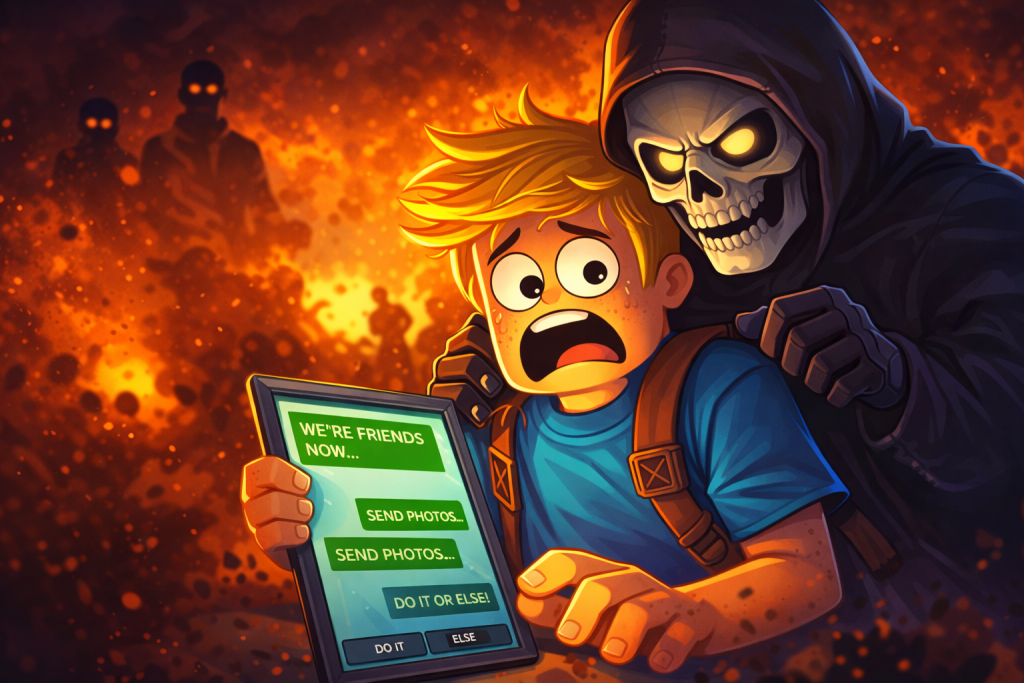
There is a violent extremist network operating right now called 764. It doesn’t live in some dark corner of the web that requires special access to find. It lives on Roblox. It lives on Discord. Two platforms your child is probably using today. Here’s how it works: recruiters pose as friends, sometimes even as romantic interests, to build trust with young users. Once they have that trust, the manipulation begins. Victims are coerced and blackmailed into producing harmful content, and that content is then used to control them further. It escalates. Quickly. And because it all happens through private messages and closed servers, most parents never see it coming. My sincere condolences go out to every individual and family affected by these groups. The damage is real, and it is devastating.
But Let’s Not Blame the Games
Here’s where I want to push back a little because I don’t want the takeaway to be “ban Roblox, ban Fortnite.” That’s not the answer. The problem isn’t the game. The problem is that your child is on the internet, unsupervised. Roblox is a platform. Discord is a communication tool. Neither one is inherently evil. But both connect your child to millions of strangers, and that is where the danger lives. Would you drop your 10-year-old at a shopping mall at 7pm — no idea who they’re meeting, no check-ins — and only come back at 10? Of course not. So why are we doing the digital equivalent every single day? When your child logs on unsupervised, that is exactly what you’re doing. You’re leaving them in a public space, accessible to anyone, with no adult presence. And some of the people in that space have very bad intentions.
You Have More Power Than You Think
The good news? You have tools. Use them.
- Your router and ISP can block specific sites or take devices offline at set times. Most routers have parental controls built in — learn them.
- Play the games with your kids. Jump into Roblox. Ask them to show you their Discord server. Be present in their digital world the same way you’d be present in their physical one.
- Know who they’re talking to. You wouldn’t let your daughter go hang out with some guy you’ve never met. The same rule applies online. If you don’t know who’s in their DMs, that’s a problem.
No More “I Don’t Understand Gaming”. I’m going to be direct: that excuse doesn’t work anymore. You don’t have to be a gamer. You don’t have to understand every platform. But you do have to be involved. Your kid deserves that. And honestly? So do you, because the alternative is finding out too late. Get curious. Ask questions. Sit with them while they play. It’s not about being the fun police. It’s about being a parent in 2026, where the internet is as much a part of childhood as the playground, and just as important to supervise.
What To Watch For
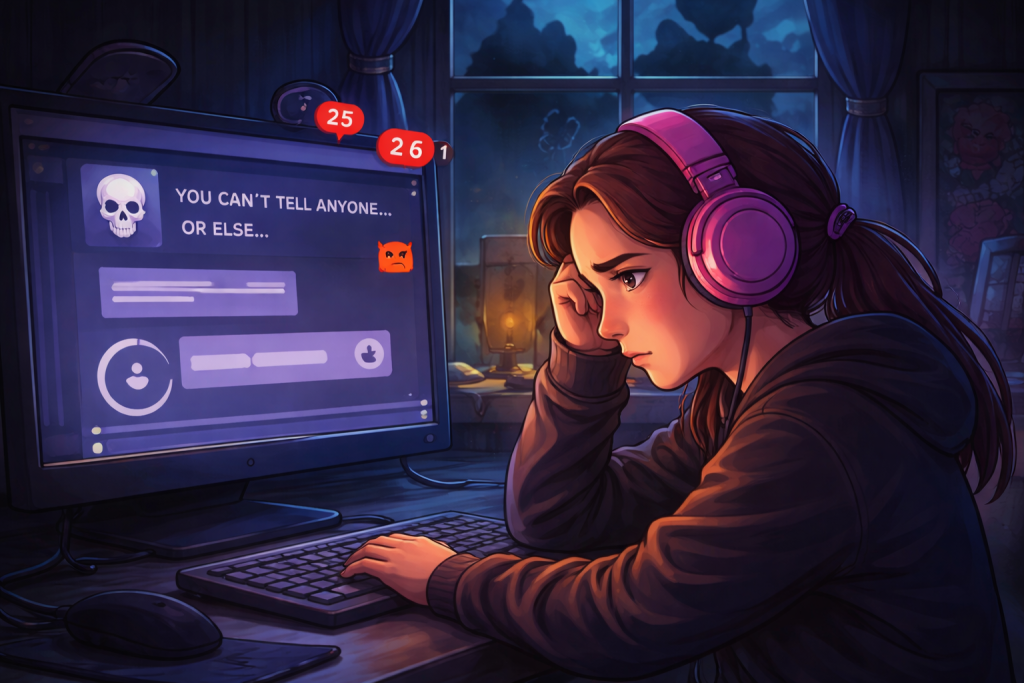
If your child is spending excessive time online, becoming secretive about their devices, withdrawing socially, or seems distressed after being online, take it seriously. Ask open questions. Keep communication lines warm. And if you ever suspect your child has been contacted by someone with harmful intent, report it immediately to relevant authorities in your country. Stay vigilant. The internet is an incredible tool but it is not a babysitter, and it is not safe by default. Be the parent your kid needs you to be, both offline and on.

